Europe is facing its most significant defence moment since the end of the Cold War, and for businesses across the region, the implications are immediate.
A prolonged war on its eastern flank, rising geopolitical fragmentation, and a clear shift in US priorities. Together, these forces have dismantled long-held assumptions about Europe’s security framework.
Rearmament is an industrial challenge, not a budgetary one
Defence rearmament is often framed as a question of spend. In reality, it’s a question of industrial organisation.
Europe doesn’t lack engineering talent, innovation, or specialist capability. What it lacks is cohesion.
Across air, land, and naval systems, Europe still operates dozens of parallel platforms, incompatible standards and nationally siloed supply chains. That fragmentation drives up costs, slows production, complicates maintenance, and weakens interoperability. In a high-intensity conflict, it simply doesn’t work.
The focus now has to be on common platforms and interoperable systems across borders:
- In the air: combat aircraft, ISR platforms, drones, avionics, and mission systems
- On and under the water: surface combatants, submarines, sensors, and electronic warfare
- On land: armoured vehicles, artillery, communications, and battlefield digitisation
- Across domains: space, cyber, data fusion, and command-and-control
Standardisation isn’t about uniformity for its own sake, but more for speed, resilience, and industrial depth.
It’s clear that Europe needs to rearm, and it can no longer assume someone else will do the heavy lifting — politically, industrially, or financially.
This is certainly a military challenge, but also one that’s geopolitical, economic, industrial, and financial. Europe’s ability to defend itself will depend not only on political will, but on whether it can rebuild a defence industrial base that’s scalable, resilient and genuinely competitive across air, land, sea, space, and cyber.
From strategic comfort to strategic autonomy
For decades, Europe benefited from a degree of strategic comfort.
NATO provided deterrence, the US delivered technological leadership, and Europe focused on incremental capability development, while prioritising social and economic agendas. That balance no longer holds.
The US is increasingly focused on the Indo-Pacific. Domestic political pressure is constraining long-term overseas commitments. The commonly known slogan “America First” is fast becoming a structural reality.
Europe therefore has to assume that access to US platforms, technologies, munitions, and logistics can’t be taken for granted, whether in scale, speed or political reliability. A reality that is already shaping procurement, partnership, and M&A decisions.
Strategic autonomy isn’t ideological, but practical, particularly for businesses making long-term investment and capability decisions.
Rearmament is an industrial challenge, not a budgetary one
Defence rearmament is often framed as a question of spend. In reality, it’s a question of industrial organisation.
Europe doesn’t lack engineering talent, innovation, or specialist capability. What it lacks is cohesion.
Across air, land, and naval systems, Europe still operates dozens of parallel platforms, incompatible standards and nationally siloed supply chains. That fragmentation drives up costs, slows production, complicates maintenance, and weakens interoperability. In a high-intensity conflict, it simply doesn’t work.
The focus now has to be on common platforms and interoperable systems across borders:
- In the air: combat aircraft, ISR platforms, drones, avionics, and mission systems
- On and under the water: surface combatants, submarines, sensors, and electronic warfare
- On land: armoured vehicles, artillery, communications, and battlefield digitisation
- Across domains: space, cyber, data fusion, and command-and-control
Standardisation isn’t about uniformity for its own sake, but more for speed, resilience, and industrial depth.

Alignment across politics, industry, and capital
This shift can’t be delivered by governments alone, and it can’t sit solely with the primes.
Rearmament at scale needs alignment across four groups:
- Political leaders: providing long-term visibility, procurement certainty and cross-border cooperation
- Industrial players: prepared to accept consolidation, specialisation and a European (not purely national) mindset
- Financial sponsors: willing to back capacity expansion, innovation and balance-sheet strength
- Advisers: structuring transactions that enable scale without stripping out entrepreneurial energy
This is where M&A becomes a strategic tool instead of a financial afterthought.
M&A as a catalyst for European defence readiness
Across Europe, M&A activity is reshaping the defence ecosystem, driving faster scale, deeper specialisation, and international expansion.
The sector is expected to remain highly attractive over the next five years, driven by rising defence budgets, ongoing technological modernisation, and persistent geopolitical tension. Financing remains available, regulatory frameworks are becoming clearer, and high-quality assets continue to attract strong interest.
A narrow window to get this right
Europe’s rearmament won’t happen overnight, but the window to shape it coherently is narrow.
If Europe doesn’t consolidate its industrial base on its own terms, consolidation will still happen, driven by external capital, fragmented procurement or crisis-led urgency.
Strategic autonomy requires tough choices: fewer platforms, deeper cooperation, meaningful consolidation and long-term capital commitment. It also means accepting that defence industrial policy can’t remain purely national in a fundamentally European security environment.
The tools, the capital, and the talent exist. What’s needed now is execution.
Rearmament goes beyond defence spending and into industrial sovereignty — in Europe, that sovereignty will be built by businesses making the right strategic choices, together.
Recent transactions by our team underline the direction of travel. Tikehau Capital’s acquisition of Scioteq shows how financial sponsors are backing critical defence electronics and avionics platforms to support international growth and strengthen European supply chains. Meanwhile, the sale of Kirintec to BAE Systems highlights how large defence groups are selectively integrating high-value specialists in electronic warfare and operational support to reinforce sovereign capability.
Across sensors, optronics, communications, munitions, maintenance, and drone systems, the message is consistent: build scale where it’s needed, and preserve specialisation where differentiation matters.
The mid-market matters more than ever
From where we sit, Europe’s defence ecosystem isn’t a single block. It is a layered network of suppliers, specialists, and scaled platforms.
- Prime contractors anchoring platforms and systems
- Tier-one and tier-two suppliers delivering mission-critical subsystems
- Niche technology champions; often founder-led, highly innovative and internationally competitive
- Service and MRO providers that are essential to readiness and lifecycle support
M&A is increasingly the mechanism connecting these layers, vertically and horizontally, creating industrial chains that can respond at speed and at scale.
Many of the technologies Europe needs most sit firmly in the mid-market. Supporting these businesses to grow, consolidate, and internationalise without losing what makes them exceptional is central to building genuine industrial sovereignty.
A narrow window to get this right
Europe’s rearmament won’t happen overnight, but the window to shape it coherently is narrow.
If Europe doesn’t consolidate its industrial base on its own terms, consolidation will still happen, driven by external capital, fragmented procurement or crisis-led urgency.
Strategic autonomy requires tough choices: fewer platforms, deeper cooperation, meaningful consolidation and long-term capital commitment. It also means accepting that defence industrial policy can’t remain purely national in a fundamentally European security environment.
The tools, the capital, and the talent exist. What’s needed now is execution.
Rearmament goes beyond defence spending and into industrial sovereignty — in Europe, that sovereignty will be built by businesses making the right strategic choices, together.

Author
Chris Kodeck
Partner
I am a Partner and Head of the Industrials & Chemicals team in France, based in Paris.
Before joining Clearwater, I was a Partner at Vulcain from its creation until its integration into Clearwater in 2025.
Belgian by origin, I cover both France and Belgium, with a particular focus on aerospace & defence, renewable energy, and specialised manufacturing.
I began my career at McKinsey & Company in London, advising on large‑cap M&A and strategy projects from 2001 to 2009.
I especially enjoy helping clients articulate their strategic ambitions to investors and trade buyers, a diversity that brings intensity, variety, and meaning to the role.
I hold an MBA from Kellogg (Northwestern University) and a degree in civil engineering from UCL (Belgium).

Author
Markus Otto
Managing Partner
I am responsible for the industrial and chemical sector for the German-speaking region and, as one of the founding partners, I am responsible for generating M&A mandates between Europe, the US, and Asia. Family businesses, corporations and private equity companies are my regular clients, for whom we as a team use our experience and (sub-sector) knowledge to identify customised and best possible solutions. My administrative responsibilities include HR and organisation in Frankfurt and Munich. Before joining Clearwater Germany as a founding member, I worked for Arthur Andersen in auditing and transaction services, where my professional career began in 1996. In my spare time, I enjoy being outdoors and I am a passionate horse rider, share this hobby with my daughter and, in addition, I get my strength and balance for the week from walks with our Great Dane.
Selected transactions in aerospace and defence
Not just numbers on a balance sheet, our transactions represent over 20 years’ commitment to our clients’ future. Helping them change the game. Even before it was ready to be changed.
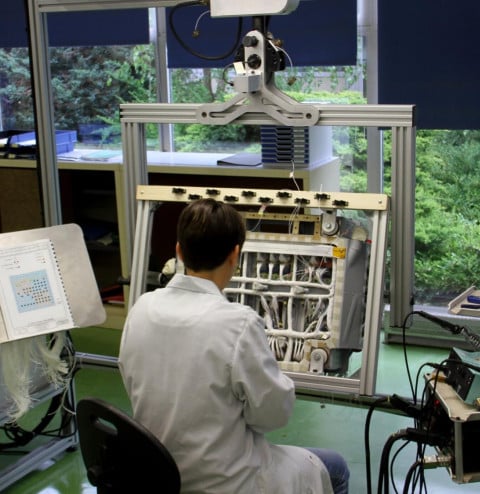
Complex electrical and electronic equipment specialist joins NSE to accelerate aerospace and defence market consolidation
Adviser to Ametra Group on the sale of Ametra Integration to NSE

Supporting a landmark aerospace deal in defence-grade visualisation
Adviser to Tikehau Capital on its acquisition of Scioteq
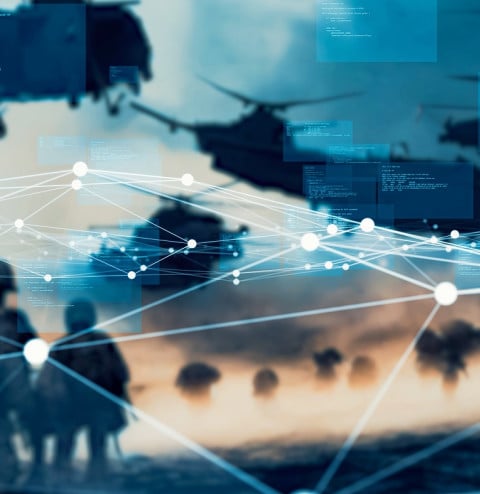
Global defence company partners with UK CEMA specialist
Adviser to Kirintec on its sale to BAE Systems
Enhancing a position in aerospace and defence engineering
Adviser to Ayesa and Grupo Sevilla Control on the sale of Ayesa Air Control to Alten
Our European industrials and chemicals leads
Our dedicated global industrials and chemicals team combines deep sector insight with full-service M&A advisory and a strong international network. We help defence businesses scale and consolidate while preserving the innovation that underpins Europe’s defence capability.