After a volatile couple of years, dealmakers came into 2025 cautiously optimistic. Interest rates looked set to ease, inflation was slowly coming under control, and confidence was starting to return, although unevenly across sectors and regions. Six months in, that optimism has translated into real momentum, with buyers and sellers getting back to the table, strategies adjusting, and valuations showing early signs of recovery.
While the market still carries a fair amount of complexity, the first half of the year has confirmed that M&A is very much alive and increasingly shaped by discipline, specialisation, and digital transformation.

Geopolitics and regulation: still creating friction and opportunity
The global backdrop remains complex. Political uncertainty, including the ongoing conflict in Ukraine, continues to add layers of caution. Regulatory change is also influencing deal timelines and buyer pools. The EU’s NIS2 directive and stricter foreign direct investment screening are creating new compliance hurdles that can slow deals or limit eligible buyers, especially for assets in sensitive sectors.
The interest rate effect: confidence starts to return
Macroeconomic factors continued to play a central role in shaping deal activity. After the sharp inflation and interest rate hikes of 2023, the prospect of falling rates in 2025 has been a key driver, especially for private equity, which has been watching financing conditions closely.
Across Northern Europe, particularly in the UK and Denmark, stable policy environments and greater visibility on rate direction have helped restore confidence. That has translated into more deal discussions, with both strategic and financial buyers more willing to engage, even if decision cycles remain longer than in pre-2022 markets.
“Access to financing is a key driver. When interest rates are expected to come down, that naturally leads to more buyer activity.”
Per Surland, Partner, Denmark
Geopolitics and regulation: still creating friction and opportunity
The global backdrop remains complex. Political uncertainty, including the ongoing conflict in Ukraine, continues to add layers of caution. Regulatory change is also influencing deal timelines and buyer pools. The EU’s NIS2 directive and stricter foreign direct investment screening are creating new compliance hurdles that can slow deals or limit eligible buyers, especially for assets in sensitive sectors.

“In defence, we’re witnessing a counter-cyclical surge. NATO rearmament and sovereign assertiveness are accelerating deal activity, though each transaction now unfolds under a geopolitical microscope.”
Chris Kodeck, Partner, France

Private equity: capital to deploy but discipline rules
Private equity firms remain under pressure to invest, and the dry powder is still there. But investment committees are very selective, more focused on their chosen sectors and resilience, whilst balancing the need to deploy with the realities of a slower decision-making environment and uncertain exit timelines.
Buy-and-build strategies continue to dominate, especially in sectors where scale and specialisation add clear value, like healthcare, software, and industrial technology. PE firms are also leaning into sector expertise more than ever, doubling down on niches where they can differentiate.
“There remains strong interest from PE in doing deals, but increased due diligence to address market uncertainty is both stretching the timescales to bring businesses to market and the PE fund investment approval process.”
Marcus Archer, Managing Partner, UK
Digital transformation: both a driver and a filter
Technology continues to be one of the biggest differentiators in deal value and execution. AI, automation, and cloud infrastructure are not just shaping what gets bought, they are also changing how deals get done.
For buyers, digital capability is now a top consideration. Businesses with scalable tech, automation, or embedded IP are drawing serious attention. On the other hand, companies without a clear digital roadmap or with weak cybersecurity are increasingly seen as risky bets.
“This is particularly evident in traditional industries. Manufacturing, for example, is under pressure to modernise. Regulatory directives like NIS2 are accelerating investment in operational tech and cybersecurity, directly influencing how buyers assess long-term value.”
Per Surland, Partner, Denmark
Digital transformation: both a driver and a filter
Technology continues to be one of the biggest differentiators in deal value and execution. AI, automation, and cloud infrastructure are not just shaping what gets bought, they are also changing how deals get done.
For buyers, digital capability is now a top consideration. Businesses with scalable tech, automation, or embedded IP are drawing serious attention. On the other hand, companies without a clear digital roadmap or with weak cybersecurity are increasingly seen as risky bets.
“This is particularly evident in traditional industries. Manufacturing, for example, is under pressure to modernise. Regulatory directives like NIS2 are accelerating investment in operational tech and cybersecurity, directly influencing how buyers assess long-term value.”
Per Surland, Partner, Denmark


Valuations stabilise and the best assets still command a premium
While average multiples haven’t returned to previous highs, the first half of 2025 has brought more stability. In sectors with strategic relevance, such as tech and business services, competition is back and buyers are paying up for quality.
Strategic acquirers have been especially active. Their longer time horizons and focus on ESG and digital integration have made them more comfortable transacting, even as financial sponsors show more caution.
“Strategic acquirers have taken the lead, they’re better positioned to implement long-term growth plans, including ESG and digitisation.”
Axel Oltmann, Managing Partner, DACH region
We completed 70 M&A transactions with a total value of €2.8bn in H1 2025

































Cross-border M&A stays strong, especially in Europe
International deal activity remained resilient in the first half of 2025, particularly across mid-market deals.
“The UK, Nordics, France, and Ireland continue to lead, while Spain and Portugal have seen a noticeable uptick in inbound interest.” Bruce Weir, COO
The food and beverage sector has been especially active, driven by global consolidation strategies. Elsewhere, motivations vary: tax reform, succession planning, and geopolitical risk are pushing some sellers to market sooner than planned, particularly in family-owned businesses.
Private equity is also leaning into cross-border deals as a way to unlock growth or exit legacy positions, often by targeting geographies that align with long-term sector strategies.

Structuring around uncertainty and deeper due diligence
One noticeable shift in 2025 has been the widespread use of creative structuring to bridge valuation gaps. Earn-outs, rollover equity, and performance-based mechanisms are now common ways to de-risk both sides of the deal.
Due diligence has also become more comprehensive. Buyers are digging deeper into everything from ESG compliance and IP protection to labour market exposure and digital readiness. With more cross-border deals, there is greater focus on local risks and regulatory compliance.
It’s no longer just about the numbers. Operational resilience and future-proofing are top of mind.
How deals get done is changing too
Behind the scenes, technology is reshaping how M&A is executed. AI and automation are starting to streamline tasks such as buyer mapping, workflow management, and knowledge-sharing, especially in cross-border deals where collaboration and speed are critical.
But it’s not just about tools. Sector insight, judgment, and trusted relationships still make the difference. As M&A grows more complex, advisers who can combine efficiency with depth will be the ones adding real value.

“The UK, Nordics, France, and Ireland continue to lead, while Spain and Portugal have seen a noticeable uptick in inbound interest.”
Bruce Weir, COO
Looking ahead
The first half of 2025 has shown that while M&A is still navigating a complex landscape, the fundamentals are strong. Buyers and investors are more selective, but they are still active, especially when deals align with strategic growth, digital capability, and long-term value.
Private equity continues to deploy capital, albeit more cautiously, and strategic acquirers are stepping up where they see synergy and resilience. Valuations are stabilising, deal structures are evolving, and digital transformation remains both a target and a tool.
As we move into the second half of the year, the focus will likely remain on quality over quantity: well-prepared businesses, strong equity stories, and thoughtful execution will be key to success in a market that rewards clarity and confidence.
Looking ahead
The first half of 2025 has shown that while M&A is still navigating a complex landscape, the fundamentals are strong. Buyers and investors are more selective, but they are still active, especially when deals align with strategic growth, digital capability, and long-term value.
Private equity continues to deploy capital, albeit more cautiously, and strategic acquirers are stepping up where they see synergy and resilience. Valuations are stabilising, deal structures are evolving, and digital transformation remains both a target and a tool.
As we move into the second half of the year, the focus will likely remain on quality over quantity: well-prepared businesses, strong equity stories, and thoughtful execution will be key to success in a market that rewards clarity and confidence.

Transactions
Not just numbers on a balance sheet, our transactions represent over 20 years’ commitment to our clients’ future. Helping them change the game. Even before it was ready to be changed.

Powering the future of premium, experience-led travel for a global audience
Adviser to Vitruvian Partners on its acquisition of Great Rail Journeys
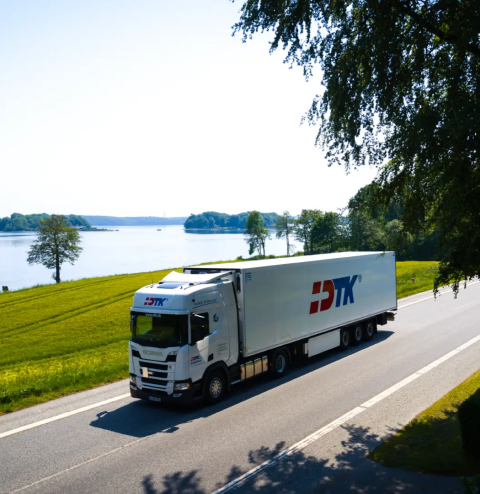
Ledende full-service-speditør i partnerskab med stærk global spiller
Rådgiver for Blue Equity og ejere ved salget af DTK Group til NTG Nordic Transport Group

Investment to strengthen a position in SMB Software across Iberian and Portuguese-speaking African markets
Adviser to PHC Software on its sale to Cegid

A new growth journey for the leading Italian alternative payment enabler
Adviser to Investcorp on the acquisition of a majority stake in Epipoli, a portfolio company of Bregal Milestone
Insights
Through the lens of global tech sector experts with decades of hands-on experience, our game-changing insights reveal things unseen by others; enhancing instead of replicating what you already know.