M&A activity in the aerospace and defence sector has gathered pace over the last 18 months, driven by heightened geopolitical tension, rising defence budgets, and the rapid adoption of technologies linked to the digitalisation of the battlefield. During the period, Clearwater has advised founders and investors as they navigate an increasingly complex and fast-changing landscape in order to achieve their objectives.
James Malcharek, Director within Clearwater’s aerospace and defence team and lead adviser on recent defence transactions including the sale of Kirintec to BAE Systems, explores the factors driving deal activity, the priorities shaping buyer behaviour, and how companies can position themselves to achieve an optimal outcome.

2. Innovation is reshaping the sector. Rapidly evolving technological advances are redefining the requirements of the modern battlefield, with capabilities once associated primarily with software and technology firms, such as AI-led solutions, increasingly applied within defence. What were once early concepts are now fully deployable systems that have been adopted on the battlefield.
At the same time, the traditional model of ‘stove-piped’, siloed, domain-specific capability is giving way to a greater emphasis on interoperability, driven by the digitalisation of the battlespace. Open standards in software and hardware are becoming more important, enabling armed forces to integrate systems more effectively and manage budgets more efficiently. This shift is likely to benefit some defence suppliers whilst challenging others, particularly those who have been slow to adapt, creating capability gaps that are increasingly being addressed through M&A.
3. The buyer universe has deepened. Both strategic acquirers and private equity firms are cash-rich and seeking exposure to areas of expected growth within defence. In Europe in particular, private equity buyers are more engaged than they have been historically, reflecting a shift in sentiment towards the sector. This has increased competition for high-quality assets across the defence value chain as investors look to back ‘future winners’ in the evolving landscape.
What's driving the recent uptick in M&A activity across aerospace and defence?
Three factors are driving the resurgence in M&A.
1. Heightened geopolitical tension has pushed defence spending higher up the political agenda, particularly across Western Europe. This has been driven largely by the war in Ukraine, which has highlighted the presence of a real and proximate adversary, underinvestment in military capability, and the increasing adoption of electronic warfare. It has also exposed a shifting political landscape in which reliance on US support—both political and military—can no longer be assumed, increasing pressure on European governments to develop sovereign capability and meet (and often exceed) NATO spending targets.
In the US, the Trump administration has recently signalled higher defence spending, targeting a budget of $1.5 trillion by 2027, reversing plans announced in early 2025 to cut federal defence spending by ~8%. This policy volatility has influenced the strategies of US defence primes and investors. Initial reactions to the proposed cuts, alongside renewed European defence spending, saw a pivot by some towards European opportunities. Whilst the renewed focus on US defence spending has shifted attention back to the domestic market, US primes remain more open to European opportunities than in the past.
What does this mean? Increasing defence budgets in both the US and Europe are translating into growing order books for major defence primes, improving visibility over future cash generation and underpinning confidence to pursue M&A.
2. Innovation is reshaping the sector. Rapidly evolving technological advances are redefining the requirements of the modern battlefield, with capabilities once associated primarily with software and technology firms, such as AI-led solutions, increasingly applied within defence. What were once early concepts are now fully deployable systems that have been adopted on the battlefield.
At the same time, the traditional model of ‘stove-piped’, siloed, domain-specific capability is giving way to a greater emphasis on interoperability, driven by the digitalisation of the battlespace. Open standards in software and hardware are becoming more important, enabling armed forces to integrate systems more effectively and manage budgets more efficiently. This shift is likely to benefit some defence suppliers whilst challenging others, particularly those who have been slow to adapt, creating capability gaps that are increasingly being addressed through M&A.
3. The buyer universe has deepened. Both strategic acquirers and private equity firms are cash-rich and seeking exposure to areas of expected growth within defence. In Europe in particular, private equity buyers are more engaged than they have been historically, reflecting a shift in sentiment towards the sector. This has increased competition for high-quality assets across the defence value chain as investors look to back ‘future winners’ in the evolving landscape.
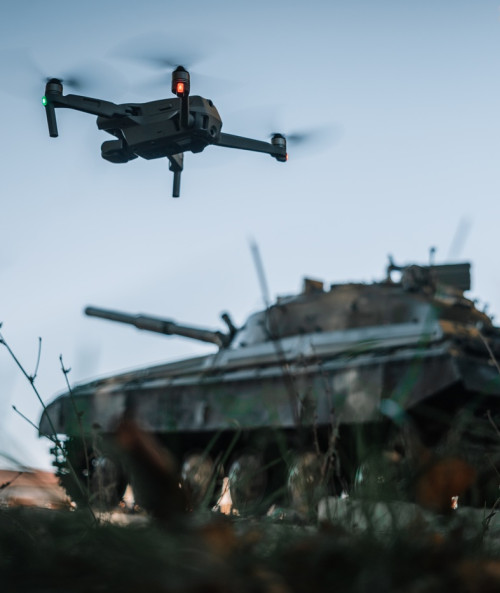
Increasing defence budgets in both the US and Europe are translating into growing order books for major defence primes, improving visibility over future cash generation, and underpinning confidence to pursue M&A.
What are the current buyer dynamics?
Strategic acquirers have been particularly active, typically focusing on domestic assets that strengthen national capability. At the same time, both US and European buyers have a track record of acquiring overseas assets to better access local sovereign customers. With strict regulatory controls, such as ITAR, limiting the cross-border transfer of sensitive technologies, international acquisitions have been an important means of accessing different geographic end markets. A notable example is BAE Systems’ acquisition of Ball Aerospace in 2023, its largest ever transaction, which enhanced the group’s exposure to key US national defence priorities.
As strategic activity around M&A has increased, a similar dynamic has emerged with private equity investors, particularly within Europe. US sponsors are also looking to Europe for growth, but are now competing with a more engaged and active European private equity landscape. Clearwater’s French team recently advised a European private equity buyer, Tikehau Capital, on its acquisition of ScioTeq. This deal recognised ScioTeq’s strong position in fast-growing, dynamic end markets and the opportunity to support its next phase of growth through enhanced technology capabilities and international expansion.
Private equity funds are increasingly competing with strategic buyers for early-stage technology businesses, growth-oriented SMEs, and highly cash-generative groups, where they can potentially offer a more agile platform for development. At the same time, private equity investors are more comfortable backing such businesses, knowing that cash-rich strategic buyers may provide a clear exit route at the right time.

The traditional model of 'stove-piped', siloed, domain-specific capacity is giving way to a greater emphasis on interoperability, driven by the digitisation of the battlefield.
What are the buyers looking for?
Buyers want established, profitable businesses with a clear edge. They’re looking for proven technology, protected IP, and earnings that stand up outside of conflict-driven demand (such as longer-term contracts and visibility over future orders). Essentially, it’s about showing that a business has strong fundamentals today and a credible growth story for tomorrow.
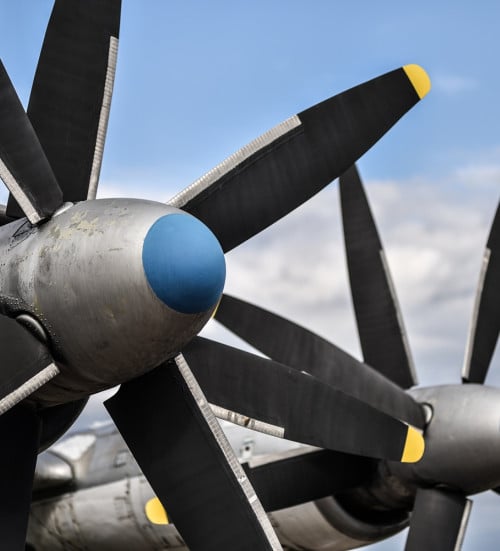
Within defence technology, we are seeing a particularly strong appetite for manufacturers and suppliers of mission-critical electronics and systems, alongside increasing interest in CEMA (Cyber and Electromagnetic Activities) and C-UAS technologies. These systems and capabilities are at the forefront of the next-generation battlespace and are becoming increasingly central to the broader digital transformation underway across the defence sector.
This was evident when our team at Clearwater advised on the sale of Kirintec to BAE. Kirintec was a first mover and emerging leader in CEMA, C-IED, and C-UAS solutions, underpinned by exceptional technology, strong IP, and an impressive financial profile with a highly attractive growth story. From a strategic perspective, BAE’s Digital Intelligence team had significant software capability, while Kirintec provided the hardware platform required to unlock new and emerging opportunities across CEMA, C-IED/C-UAS technology, and digital intelligence.
What do recent deals suggest about the appetite for defence technology?
Our recent transaction experience across manufacturers and suppliers of critical defence technologies underscores the depth of demand for differentiated assets with proven technology and IP. Where a company can demonstrate real-world adoption and a genuine leadership position in its market, appetite from global buyers—both strategic and private equity—remains strong.
US sponsors are looking to Europe for growth, but are now competing with a more engaged and active European private equity landscape.
5. How does Clearwater help clients get ready for a successful transaction?
We typically engage with clients 12-18 months ahead of a transaction. This preparation period is vital to building a detailed understanding of the business to enable us to position it in the best way possible but also support shareholders and management teams with strategic decisions ahead of a sale process. This early work focuses on strengthening the equity story and addressing issues that could otherwise impact execution, and ultimately value, once the business comes to market.

Alongside this, we work with shareholders to identify the most likely buyers to nurture and bring into the conversation at the right time, drawing on our international network across strategic buyers and private equity investors. With trade in particular, leveraging our strategic-level relationships across defence primes early has been key to building engagement with the right internal sponsor. This not only builds strategic appetite and momentum ahead of a process but also allows enough time for strategics to organise themselves internally, ensuring they are ready to participate in an efficient, competitive process.
We have applied this approach across our recent transactions, working closely with leadership teams to frame the opportunity around both current performance and future potential and then drawing on our relationships across defence primes and private equity investors, often using trade events such as DSEI UK to start discussions early with potential buyers.
Once a formal process is launched, we tightly manage each stage - from preparation of data and materials through to Q&A, due diligence, and negotiations with buyers - supported by the wider team’s expertise in modelling and data analytics.
Finally, defence is a highly regulated sector and effectively managing both the external regulatory landscape and buyers’ internal governance is a practical but critical aspect of any transaction. In recent transactions, we have encountered these challenges firsthand, and it has been through early preparation and a deep understanding of the buyer universe that we have successfully navigated internal approval compliance requirements - particularly for defence primes - as well as national regulations such as NSIA, CFIUS, and ITAR, the latter two being especially relevant for US buyers.
The emphasis on preparation and process discipline helps maintain momentum, supports informed decision-making on both sides, and increases the likelihood of a timely and successful outcome.
There is particularly strong appetite for manufacturers and suppliers of mission-critical electronics and systems, alongside increasing interest in CEMA and C-UAS technologies. These systems and capabilities are at the forefront of the next-generation battlespace.
What do recent deals suggest about the appetite for defence technology?
Our recent transaction experience across manufacturers and suppliers of critical defence technologies underscores the depth of demand for differentiated assets with proven technology and IP. Where a company can demonstrate real-world adoption and a genuine leadership position in its market, appetite from global buyers - both strategic and private equity - remains strong.


AUTHOR
James Malcharek
Director
I am a Director in the Industrials & Chemicals team, with a particular responsibility for the Industrial Technology and Building Materials sectors. I joined Clearwater in 2021 from Lazard, where I spent four years, primarily focused on the industrial sector. Before joining Lazard, I qualified as a Chartered Accountant in corporate finance at Ernst & Young. My experience spans public and private companies, primarily advising on mergers, acquisitions, and disposals.
Meet our aerospace and defence team
Clearwater’s aerospace and defence team has extensive experience successfully advising shareholders, founders, and investors across next-generation defence technologies. To find out more, speak to a member of our team.


